English
Article
CPE
B2
Cambridge C2 Proficiency (CPE): An Overview of the Highest Level English Qualification
The Cambridge C2 Proficiency (CPE) exam is one of the highest-level English language qualifications offered by Cambridge English.
Word count
513
Expected time
3m
Reading time
00:00
Reading speed
0 WPM
Fully clicked
0
Please login to save your reading statistics.
Premium audio reading
Choose a smoother voice and listen with natural speed.
Ready
Voice
Speed
0.90x
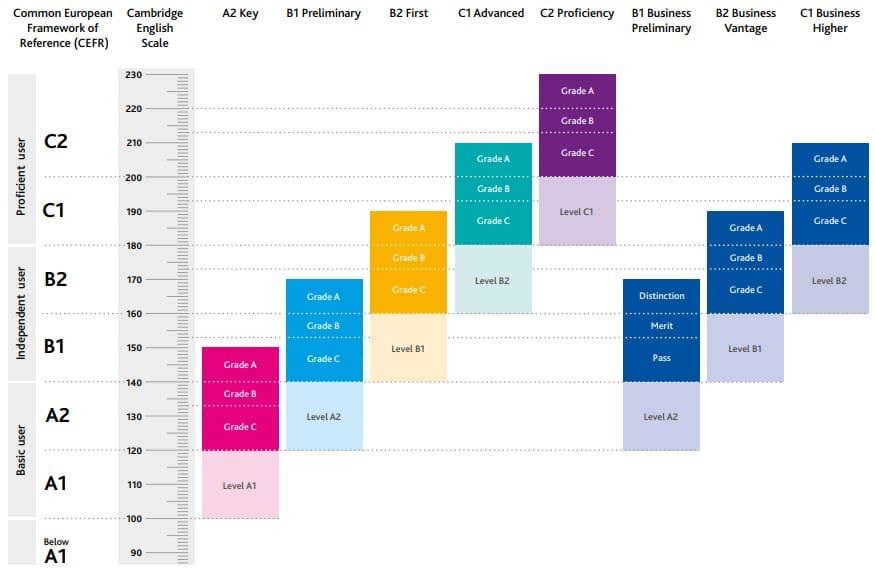
The Cambridge C2 Proficiency (CPE) exam is one of the highest-level English language qualifications offered by Cambridge English. It is designed to assess whether a learner has achieved a level of English comparable to that of an educated native speaker. Positioned at C2 on the Common European Framework of Reference for Languages (CEFR), it represents advanced mastery of the language and is often used for academic, professional, and immigration purposes.
Unlike lower-level examinations that focus on functional communication, the CPE evaluates the ability to use English with precision, sophistication, and flexibility across a wide range of contexts. Candidates are expected to understand complex texts, express themselves fluently in both spoken and written forms, and demonstrate control over subtle shades of meaning.
The exam is structured around four main components: Reading and Use of English, Writing, Listening, and Speaking. The Reading and Use of English paper is particularly demanding, as it combines comprehension with advanced grammar and vocabulary manipulation. Candidates must demonstrate not only understanding of detailed written material but also the ability to transform and restructure language accurately.
The Writing component requires the production of well-structured, formal and semi-formal texts, such as essays, reports, proposals, and reviews. High-level coherence, lexical sophistication, and grammatical control are essential. Candidates are expected to present arguments clearly and persuasively, often engaging with abstract or intellectually challenging topics.
The Listening section assesses the ability to understand a variety of spoken English, including lectures, interviews, discussions, and media broadcasts. The speech is typically fast, natural, and may include different accents, reflecting real-world communication conditions at an advanced level.
The Speaking test is conducted face-to-face with one or two other candidates and two examiners. It evaluates fluency, interaction skills, pronunciation, and the ability to develop and defend opinions in real time. Candidates must demonstrate not only accuracy but also spontaneity and adaptability in conversation.
A defining feature of the CPE is its emphasis on linguistic precision and depth of understanding. At this level, candidates are expected to distinguish between subtle differences in meaning, use idiomatic expressions appropriately, and manipulate complex grammatical structures with ease. The exam does not simply test knowledge of English, but rather the ability to operate confidently within it in academically and professionally demanding situations.
Preparation for the CPE typically involves extensive exposure to authentic English materials, including academic texts, journalism, literature, and formal discourse. Candidates often engage in advanced writing practice, critical reading, and structured speaking activities to refine their language control. Vocabulary development at this stage is less about learning basic words and more about mastering collocations, nuance, and register.
The CPE is widely recognised by universities, employers, and institutions around the world as proof of exceptional English ability. It is often accepted for admission to postgraduate programmes and for professional roles where advanced communication skills are required.
Overall, the Cambridge C2 Proficiency exam represents not just language competence, but full operational command of English in complex, real-world and academic contexts. It is considered the final stage in the Cambridge English examination system, marking the transition from advanced learner to proficient user of the language.