English
Article
GRE
B2
The GRE: Structure, Purpose, and Its Role in Graduate-Level Academic Assessment
The Graduate Record Examination (GRE) is a standardised test widely used for admissions to graduate and business schools, particularly in the United States and other English-speaking academic systems.
Word count
444
Expected time
3m
Reading time
00:00
Reading speed
0 WPM
Fully clicked
0
Please login to save your reading statistics.
Premium audio reading
Choose a smoother voice and listen with natural speed.
Ready
Voice
Speed
0.90x
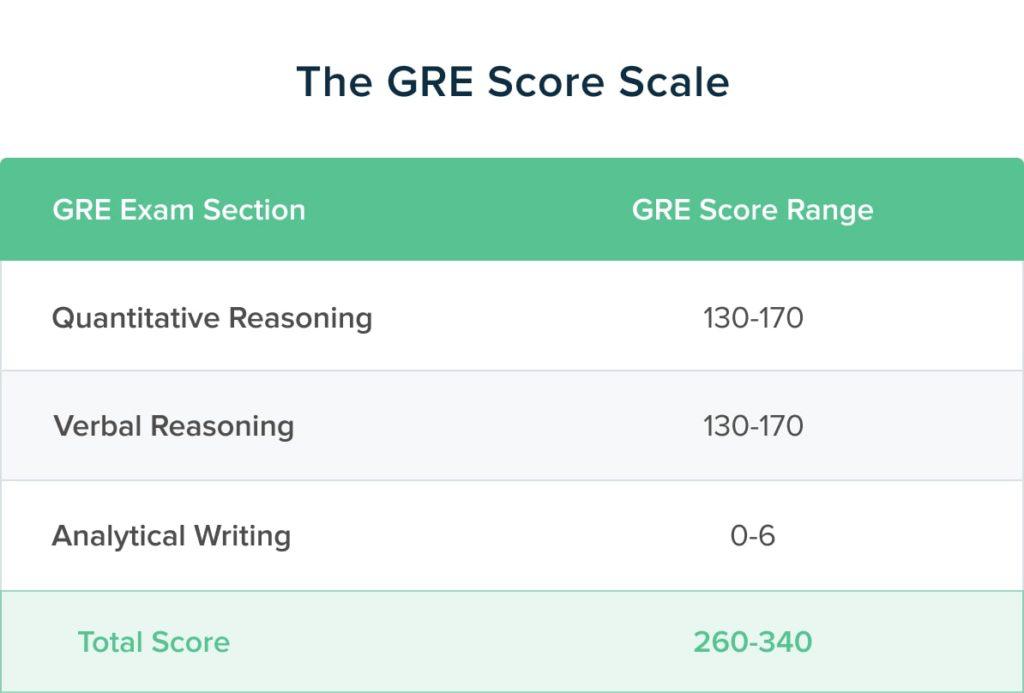
The Graduate Record Examination (GRE) is a standardised test widely used for admissions to graduate and business schools, particularly in the United States and other English-speaking academic systems. It is designed to evaluate a candidate’s readiness for advanced academic study by assessing a combination of verbal reasoning, quantitative ability, and analytical writing skills.
Unlike subject-specific examinations, the GRE is intended to measure general cognitive and academic competencies rather than mastery of a particular discipline. Its underlying assumption is that success in postgraduate education depends not only on specialised knowledge, but also on the ability to reason critically, interpret complex information, and communicate ideas effectively under time constraints.
The test is typically divided into three core sections. The verbal reasoning component assesses the ability to analyse written material, understand nuanced meanings, and evaluate arguments. It frequently includes dense academic texts that require careful interpretation, as well as questions that test vocabulary in context rather than isolated memorisation.
The quantitative reasoning section evaluates mathematical proficiency in areas such as algebra, arithmetic, geometry, and data interpretation. However, the emphasis is not on advanced mathematical theory, but rather on problem-solving skills, logical reasoning, and the ability to apply quantitative methods to structured and semi-structured scenarios.
The analytical writing section requires test-takers to construct coherent, well-reasoned essays in response to specific prompts. These tasks assess the ability to articulate complex ideas clearly, support arguments with logical reasoning, and maintain structural coherence under strict time limitations. This section is often considered particularly important in demonstrating readiness for academic writing at the graduate level.
In terms of format, the GRE is administered in a computer-based adaptive structure for certain sections, meaning that question difficulty may adjust based on performance. This adaptive nature is intended to provide a more precise measurement of ability across different proficiency levels.
Preparation for the GRE typically involves extensive practice with timed sections, vocabulary development, and familiarity with question types. Many candidates also engage in analytical reading of academic texts to improve comprehension speed and conceptual interpretation. Unlike purely content-based exams, success in the GRE often depends on strategic thinking and familiarity with standardized testing conventions.
Critically, the GRE has also been the subject of ongoing debate within higher education institutions. While some universities continue to regard it as a useful comparative metric for applicants from diverse educational backgrounds, others have adopted test-optional or test-flexible policies, questioning the extent to which standardised testing accurately reflects academic potential.
Nevertheless, the GRE remains a widely recognised component of graduate admissions globally. It continues to function as both a selection mechanism and a benchmark for assessing readiness for the intellectual demands of advanced study, particularly in research-intensive academic environments.